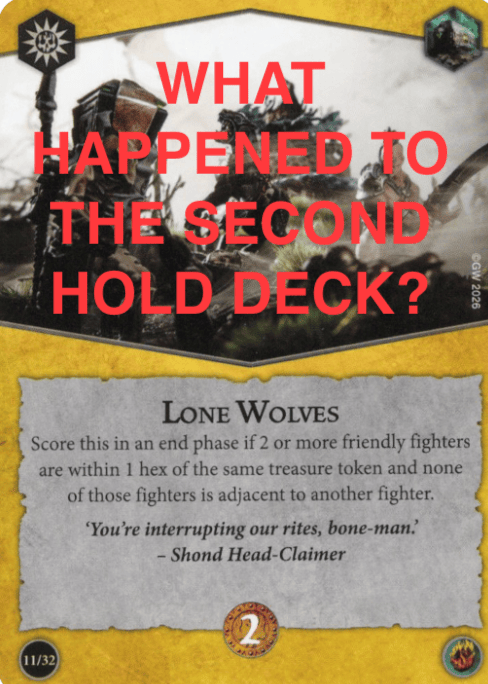
Ben: Six months ago we received the unimaginable, incredible, thought-to-be legend second hold deck, Nexus of Power. Me and the two other hold enjoyers could not be more excited, until we got the full decklist. In this article I am going to discuss what makes Nexus such a strange hold deck and what pairings allow it to use its strengths.
Hold 101
Before I get into Nexus, we need to be clear on what makes a good hold deck. A good hold deck needs to do as many of the following as possible:
- High scoring end phases
- Mobility (pushes, teleports)
- Anti-driveback
- Defensive upgrades
By nature hold will score less glory from kills than aggro, as aggro can attack every activation while hold needs to “burn” activations to move onto tokens. This weakness needs to be balanced out by having a higher glory ceiling than aggro. They also need to be able to reach and get onto tokens, making pushes and teleports that much more important for hold. Once on a token the fighter needs to stay on a token, making defensive upgrades and anti-driveback incredibly important. Looking at Emberstone Sentinels, it has a lot of good cards in all of these categories.
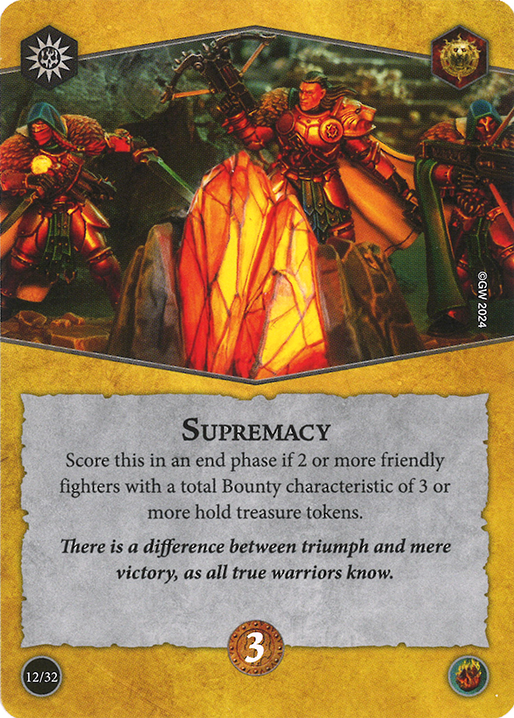

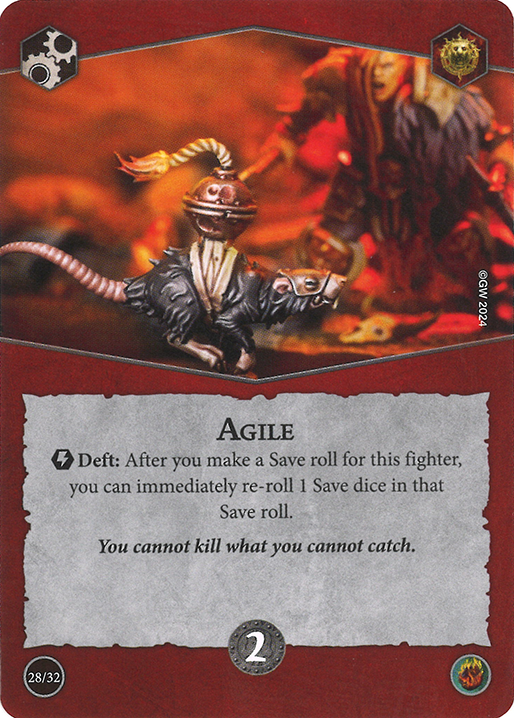
Emberstone Sentinels has two incredibly consistant, high scoring end phases with Supremacy (the best three glory objective in the game), Iron Grasp and Slow Advance. It supports this with both Sidestep and Confusion as incredible tools to get on tokens in a power step, Hidden paths to teleport to any edge hex, Duellist to guarantee “overrun” and Great Speed to reach tokens that are just a bit out of reach (technically The Extra Mile does this too, but that card is bad). It has Settle In, Inviolate, Sharp Reflexes, Agile and Great Fortitude to boost the defences of the fighters on tokens, while using Hold the Line, Brute Momentum and Settle In to block drivebacks. All of this makes the deck an incredibly solid hold deck, even if it does have weaknesses (such as the single good surge it can run).
I (don’t) Like those Odds

Looking at Nexus of Power, the first thing that comes in mind is that it has a plot card, namely getting +1 range while standing on a treasure. This is a nice bonus for the deck, but does not accomplish any of the four goals of a hold deck that were stated above. It can allow you to increase your damage, as you can get more charges while moving on tokens, decreasing the number of “burnt” activations on the move action, however it does not directly help you score you hold objectives. It also allows your opponent to flip two treasures to covers, which forces you to delve them up, gives your opponent double supports as successes on the tokens important for them, scores them Torn Landscape/Desolate Homeland or denies yourself glory off of not being able to make covetous attacks until they are flipped up, none of which are good outcomes.
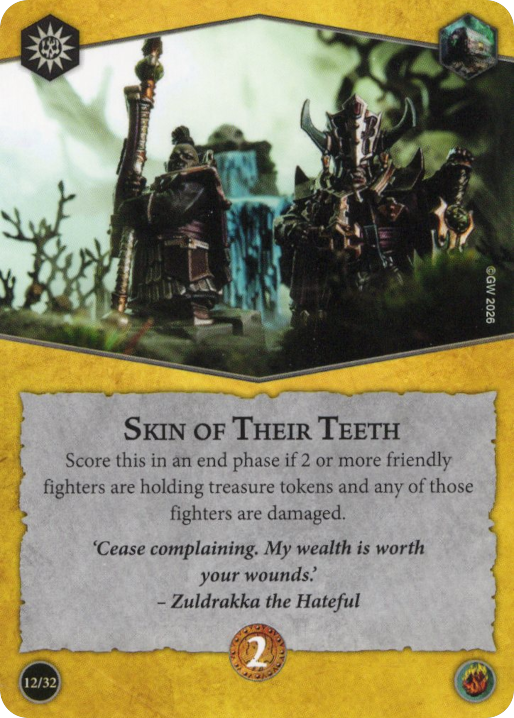
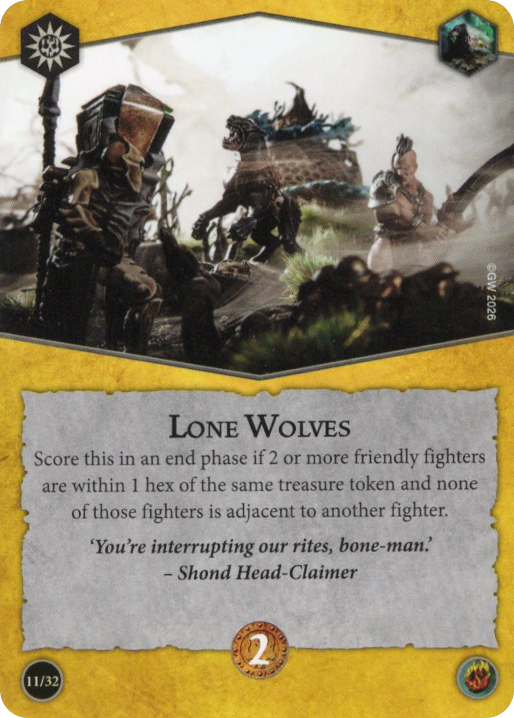
Looking at the end phases, we would want to see high scoring end phases that want you to hold treasure tokens. Given that ES contains three of these, two of which are incredibly consistent, how many are in this deck? Two, one of which is a repeat from ES in Slow Advance (which is also the worst of the three high scoring EPs from that deck) and Skin of Their Teeth, a card that is inconsistent and requires your opponent to hit you and not kill you. In addition to this it contains Lone Wolves, a card that actively can’t be scored if you are holding treasures, as you need two fighters that are not adjacent to other fighters and both adjacent to a treasure (Quick note, what is this design. They made a hold deck and then printed an objective that requires you to be NEXT TO a treasure instead of on it. Great game design). The last 2 glory objective requires you to attack while covetous with three different fighters. This card actually can be scored by only charging onto tokens, something the deck makes easier by giving you a range extension, which makes it the best objective in the deck, even though it can still punish you if you are forced to move onto a token instead of charge and is denied by the plot card of the deck.
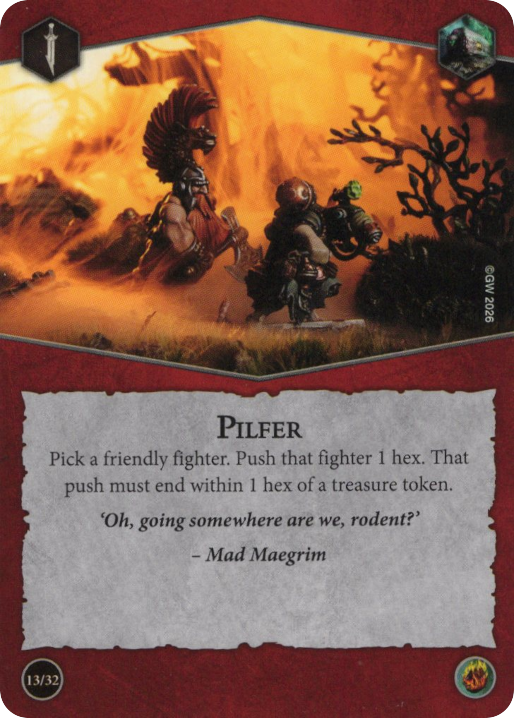
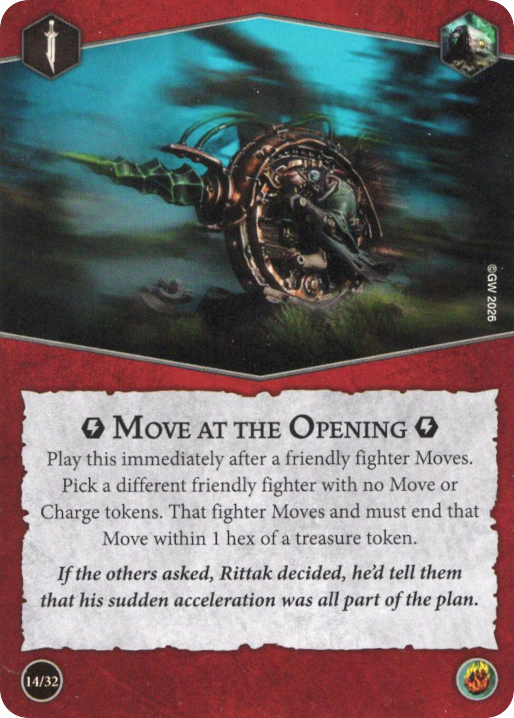
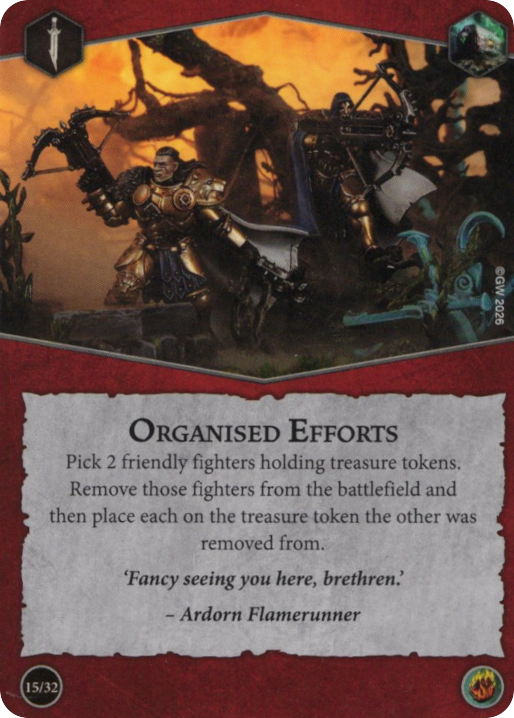
Alright, so if there is no payoff for standing on treasures, there should at least be a lot of mobility, defensive upgrades and anti-driveback, right? Well for mobility, yes, actually. It contains Pilfer, which is basically Sidestep but you need to push onto or adjacent a treasure, something you want to do anyway. Move at the Opening is a free move onto a treasure, which is often just a 13th activation, so it can’t be bad. It also has Organised Efforts to swap two fighters, which does not help you get on tokens but is very flexible when you are already on them. This is an incredibly solid suite of cards that allow you to get onto tokens and a major benefit for picking this deck
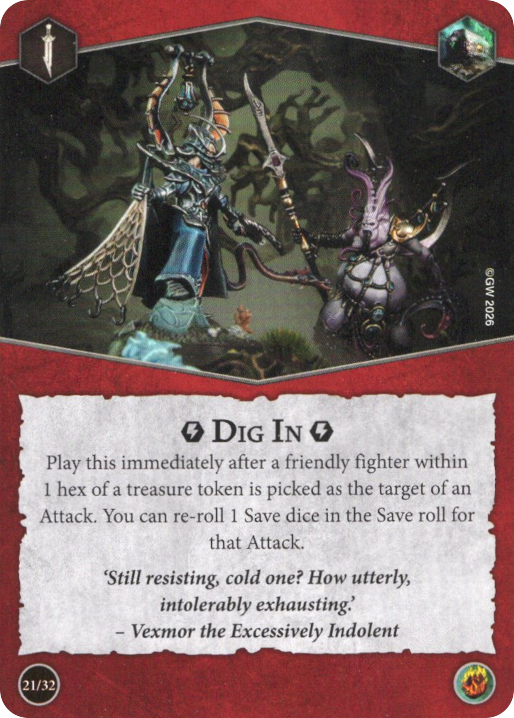
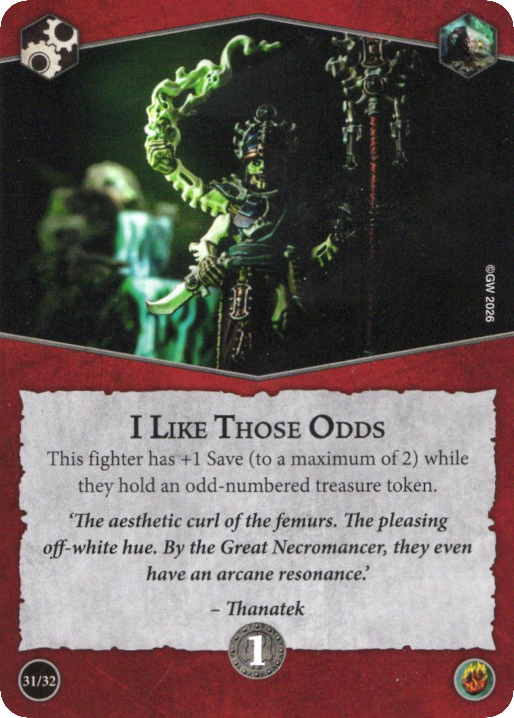
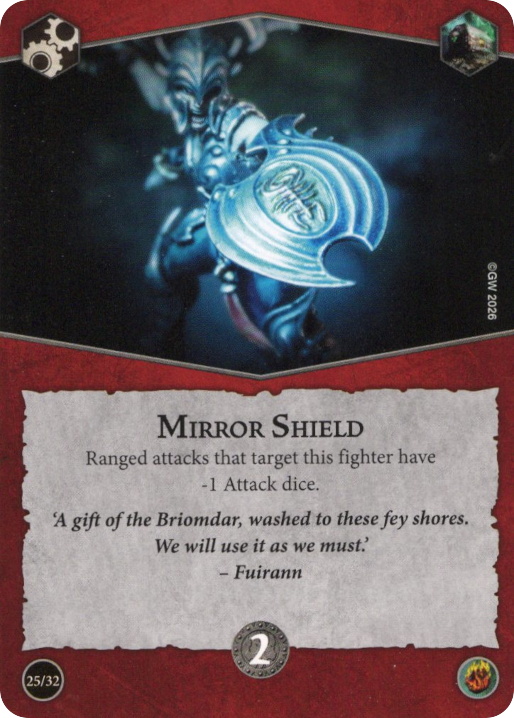
In terms of defensive upgrades this deck is not the best, but it does have some valuable tools to keep your fighters alive. Into the Deepwoods is the mandatory guard ploy for a hold deck and is incredibly valuable for the pairing, even though it forces you to invade. Dig In allows you to proactively give yourself a re-roll on defence, which can be useful, however is often wasted as you have to activate it before knowing your opponents attack roll. Inviolate is a reprint from ES and is still incredible in the right matchups and does nothing against others. Mirror Shield is technically a defensive upgrade, but is so heavily, heavily reliant on a specific matchup (Thundriks Cata/HG) and usually does nothing. Lastly, the deck contains I Like Those Odds, which is Sharp Reflexes, except it only activates while standing on an odd token; what an incredibly odd change to make (although the name is better). This list does have a high quantity of cards, however the sheer power of cards like Agile is missing here. Into the Deepwoods is a worse Settle In (although it is still good), I Like those Odds is worse Sharp Reflexes, both decks contain Inviolate and the other two are not that good and barely playable, if at all.
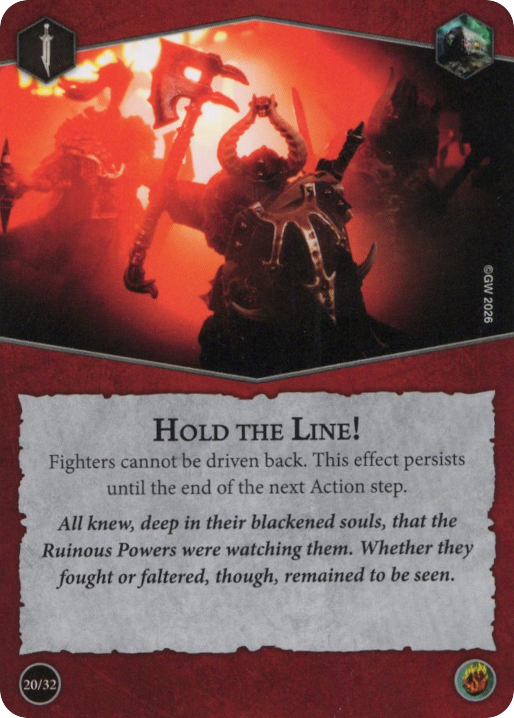
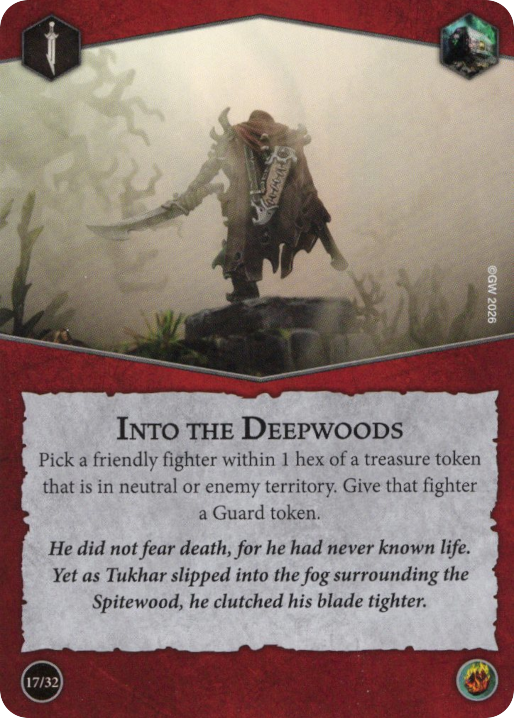
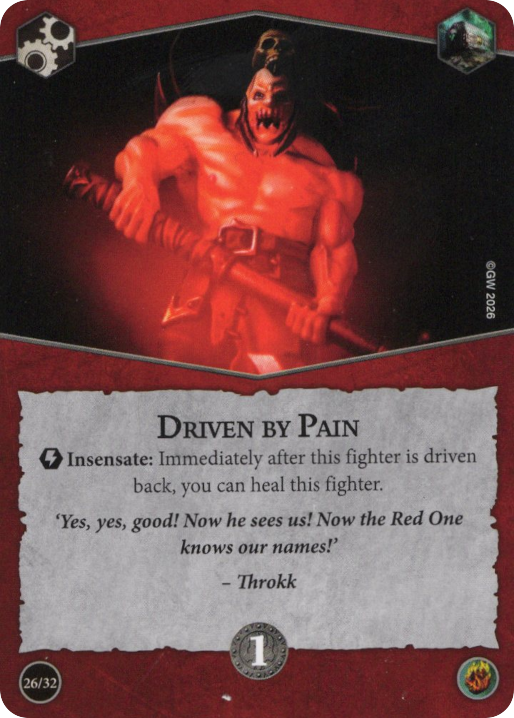
The last important thing to look at is anti-driveback, of which the deck has almost nothing. It reprints Hold the Line from ES (the third important reprint from the literal only other hold deck), which is a useful tool to stay on a token for that last action from the opponent. Into the Deepwoods also blocks driveback, as guards are busted. The only other card that somewhat fulfils this role is Driven by Pain, which does not even stop driveback, instead giving you a consolation prise of healing a fighter for not scoring any glory in the end phase. This line-up is incredibly bad, especially as one of the two cards is already in ES, so the double hold pairing does not even gain anything from it. The only thing saving it is Into the Deepwoods (now the second category in a row where this is true), but one card simply isn’t enough to fuel a game plan.
The Break Out of Identity
So what does Nexus of Power contain if not cards that support holding treasures? A lot of this deck is built upon the Plot Card giving the fighters that are holding treasures a range extension. It has a lot of ploys and upgrades that benefit your attacks in some way; way more than ES has.
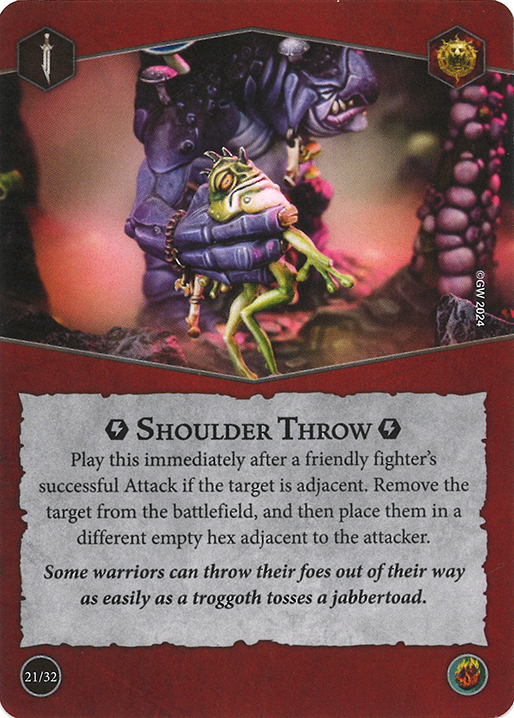
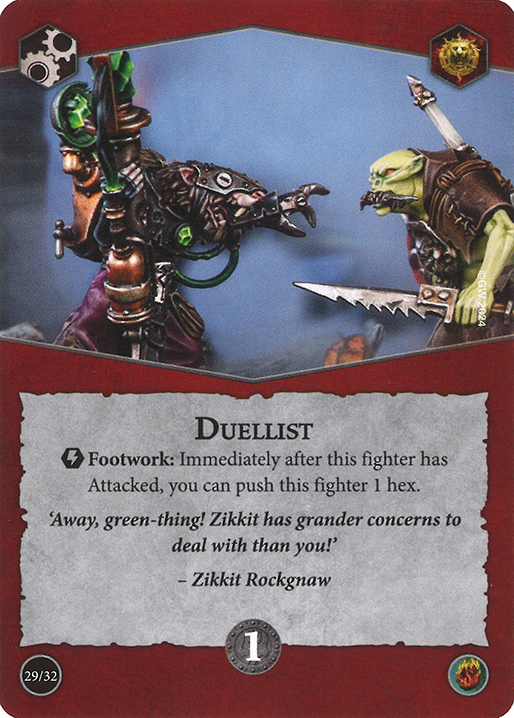
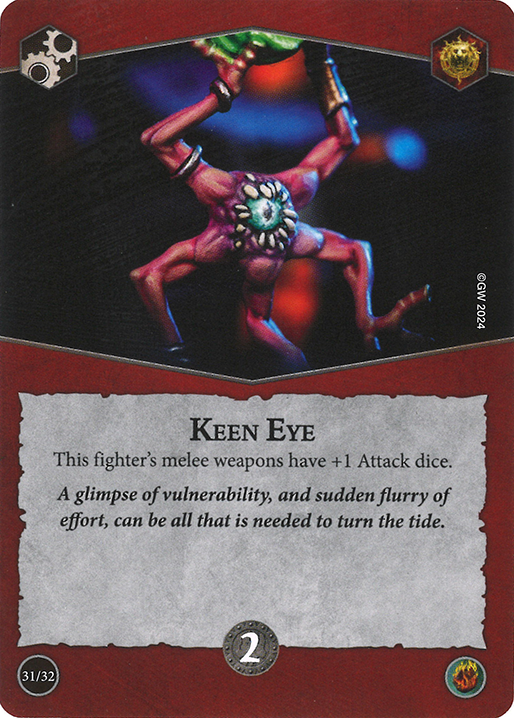
ES contains 1 ploy that benefits your attacks, with Shoulder Through, a card designed to allow you to move a fighter off a token, even if they can’t be driven back. Even though this card mentions attacks, its core function benefits your game plan. In the upgrade section this deck has more upgrades that benefit attacks, but still not that many. Keen Eye and Great Strength are both strong staples and are still good here, even though they don’t help you standing on tokens as killing fighters is still an effective method to remove enemies off of treasures you need. Duellist also benefits your attacks, however it directly helps you by acting as a guaranteed “overrun” type effect, pushing you on the treasure you just drove the enemy off of. Of the power cards that require attacks in this deck, two of them directly help you to score your end phases and the other two are strong generic staples that don’t dilute the decks power cards, as every other power card helps you to score your hold objectives.
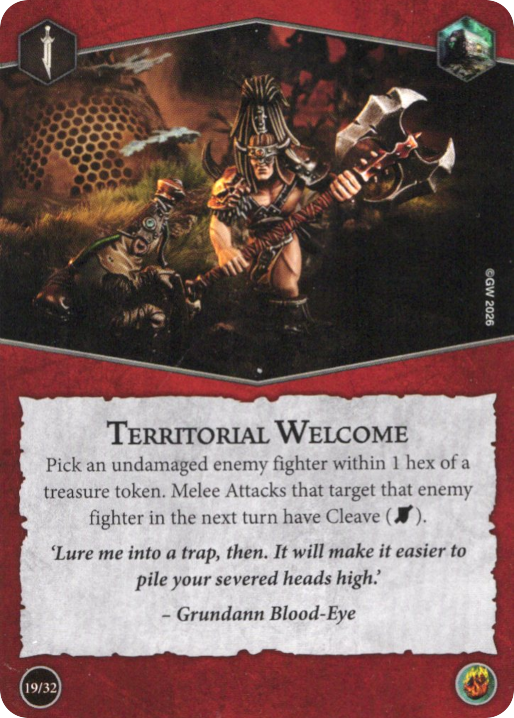
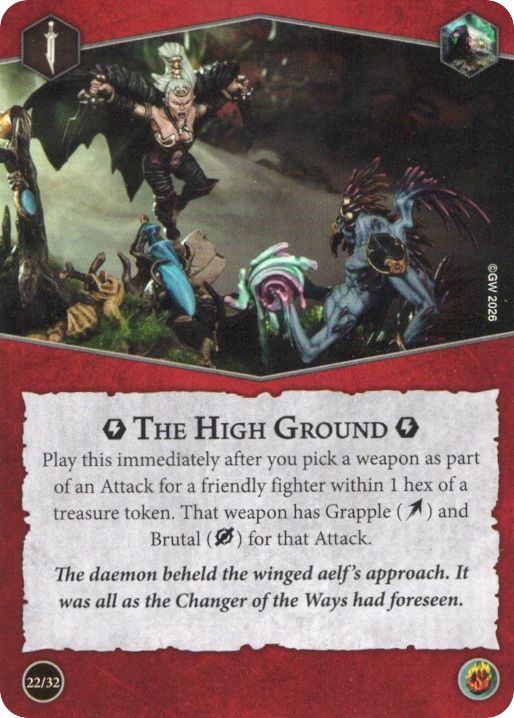
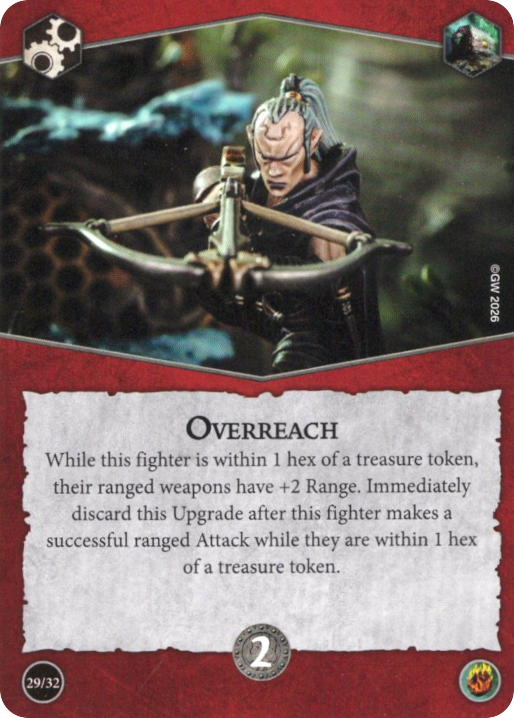
On the other hand, Nexus contains 3 ploys that care about attacks and 4 upgrades. The decks three attack ploys are Defiance, a surge that gives you an extra attack die, Territorial Welcome, a ploy that gives you cleave and The High Ground, a ploy that gives you grapple and brutal. All these do is make your attacks more likely to hit, which is not the main game plan of a hold deck, and even then Territorial Welcome and especially The High Ground are still incredibly situational. The same principle is true for the upgrades, which are Cautious Attitudes, Overreach, Spiteful Defender and Starmaw. These upgrades do not help you get onto tokens in any way. 3/4 of these increase the range of your attacks even more, something that is usually not that impactful (especially if the attack already has 3-4 range), while Spiteful Defender is grievous that can’t even be used while charging onto a token. Contrasting with Sentinels, this deck has way more power cards that care about attacks, but they help the strategy of the deck less than the ones found in ES.
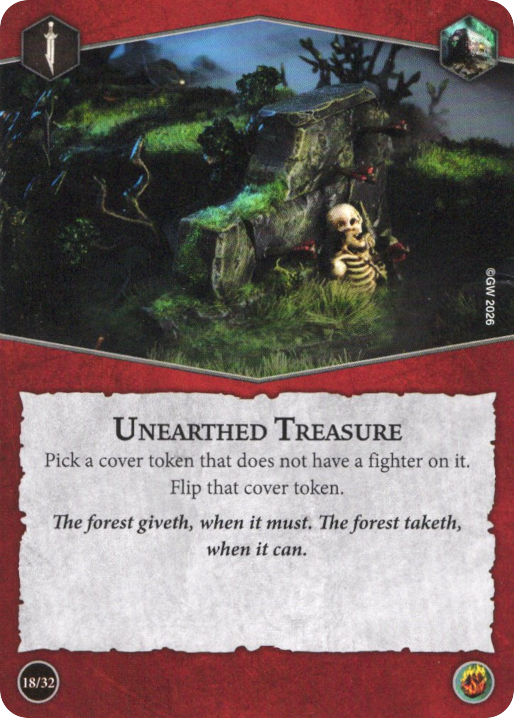
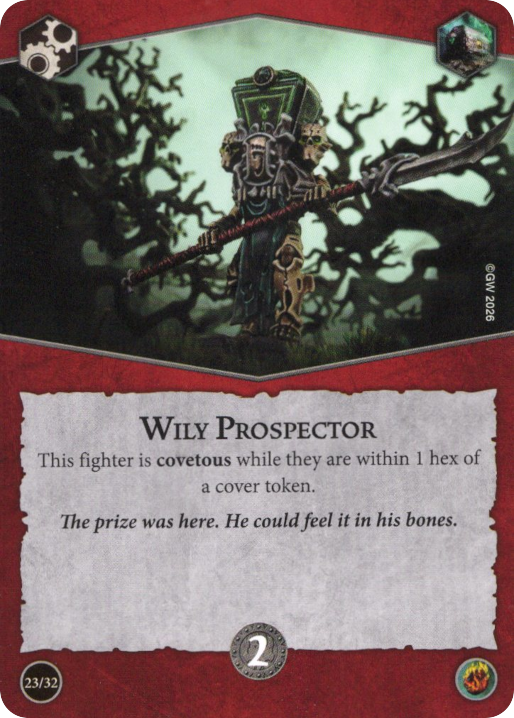
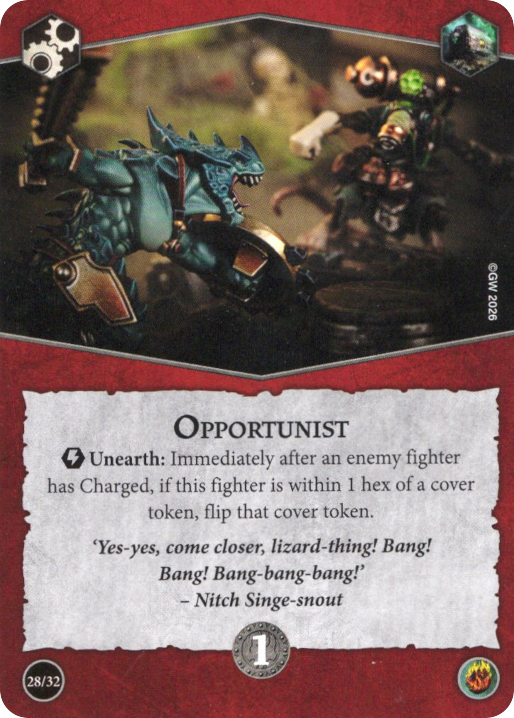
The rest of the deck is designed around flipping covers to treasures or making you covetous while next to a cover. While the idea of these cards make sense, why are there this many slots to try to negate the downside of the plot, something that can also just be done by delving. These two categories of cards take up half of the power cards, so obviously the cards that benefit holding are going to be few and far between, as a deck only has 10 ploy/upgrade slots.
Its definitely All Part of the Plan
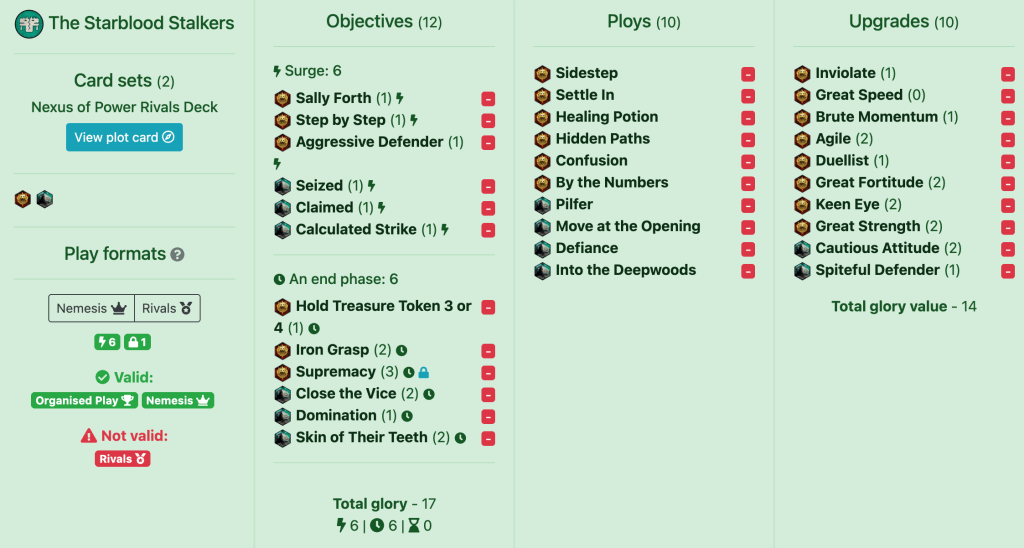
ES/NoP is the natural double hold pairing, as both of these decks are stated to be in the hold archetype, however it seems that the pairing is not as effective as it should be. Nexus of Power does not really have any pure hold payoffs like ES does. It lacks the power of Supremacy and Iron Grasp and replaces it with clunkier 2 glory objectives that require you to do multiple things that may or may not include holding to be scored. I also have yet to mention the legal requirement of having 3 fighters to score any glory in Nexus, so if multiple small minions die for a swarm or a single fighter for a 4×4 or elite, a lot of the deck becomes incredibly difficult, if not impossible to score.
NoP also does not help with the biggest weakness of ES, which is its single playable surge. NoP has three playable surges, one mediocre surge and two incredibly bad surges, requiring the double hold player to sleeve up Step by Step and Sally Forth. Even worse is that most of the NoP surges require a specific result on attack dice, such as an overrun, a crit or a successful attack, meaning that the hold player not only needs to make sure they are on tokens, but also needs to maximise their accuracy at the same time.
The ploys have good synergy, as the Sidestep clone from NoP, Pilfer, is not called Sidestep, so both can be played in the same deck. This in addition to Move at the Opening allows ES/NoP to have 4 “pushes” to get a fighter onto a treasure without needing to activate them. Into the Deepwoods is a second guard ploy, which is incredibly valuable for the pairing as well. These ploys are the main reason to run this specific pairing, as four abilities to get on tokens is incredibly powerful.
The upgrade synergy is also not that great. The deck does give a second tool for grievous with Spiteful Defender and a worse version of Sharp Reflexes for any warband that have multiple fighters on one defence die. The main pull for this pairing in the upgrades is actually the NoP plot card, which makes upgrades like Keen Eye stronger. This benefit is greatened by Cautious Attitudes, which gives the accurate and strong attacks a range of 2 even if you aren’t on a treasure or up to a range of 4 if you are on a treasure.
Moving (away from NoP) at the Opening
Now, what if I told you I have been lying to you this entire time. There actually has been a second hold deck hiding in the “Flex” category for the past two years of Underworlds V2.
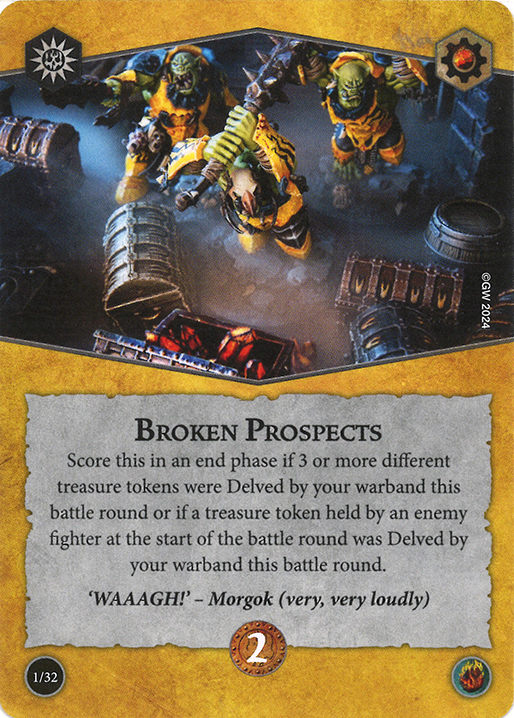
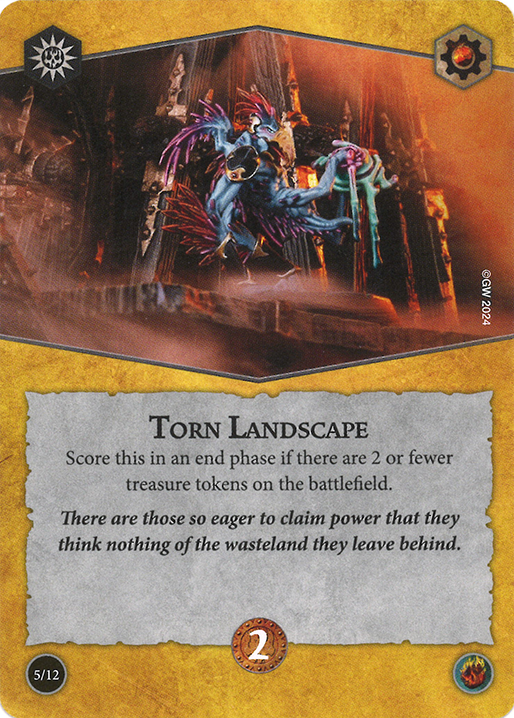
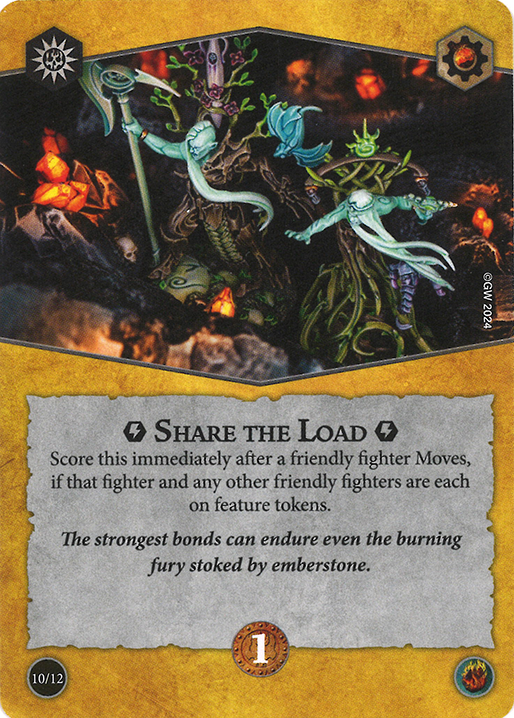
Pillage and Plunder is a deck that achieves everything Nexus wishes it could do. It contains two high scoring end phases that require you to have been on treasure tokens in Torn Landscape and Broken Prospects. It has the best three glory “denial” objective in the game in Strip the Realm and its surges actually also want you to get onto feature tokens, with the two restricted surges being easy to score by just delving and Share the Load just being scored by walking onto tokens. While Nexus of Power needs to contemplate when to move on a cover to delve it back up or to make a covetous attack, all pillage wants to do is get onto treasures or covers, making the game plan a whole lot more linear. Its scoring is also a whole lot more consistent and passive, forcing your opponent to engage with you. This is helped by the 0 cards in this deck that require you to be in your opponents territory.
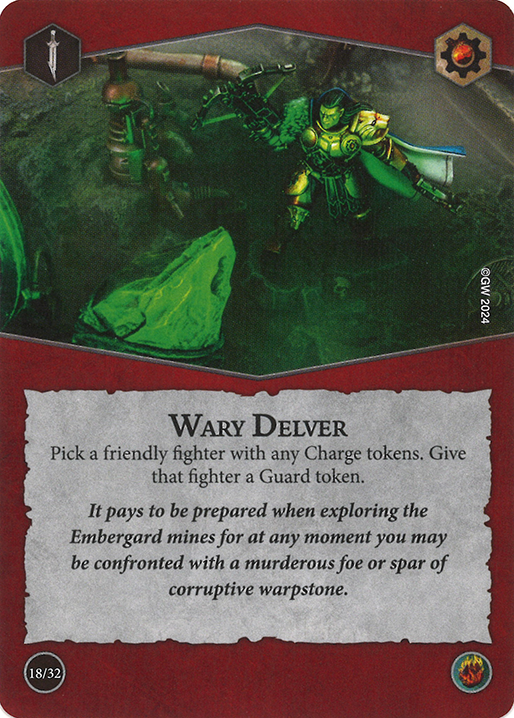
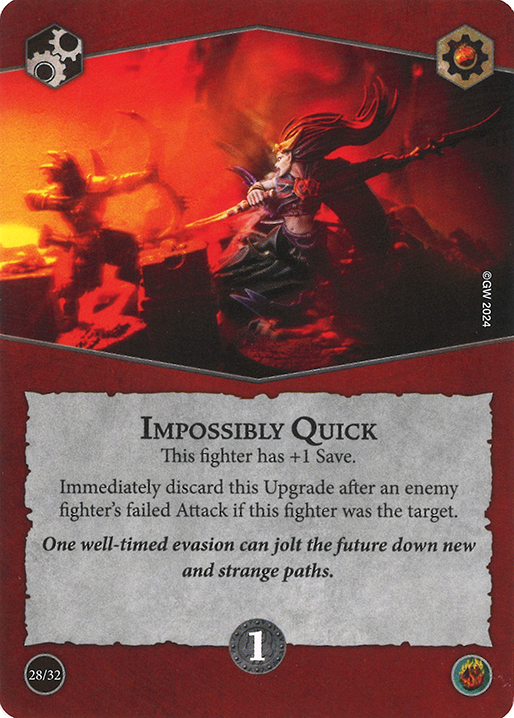
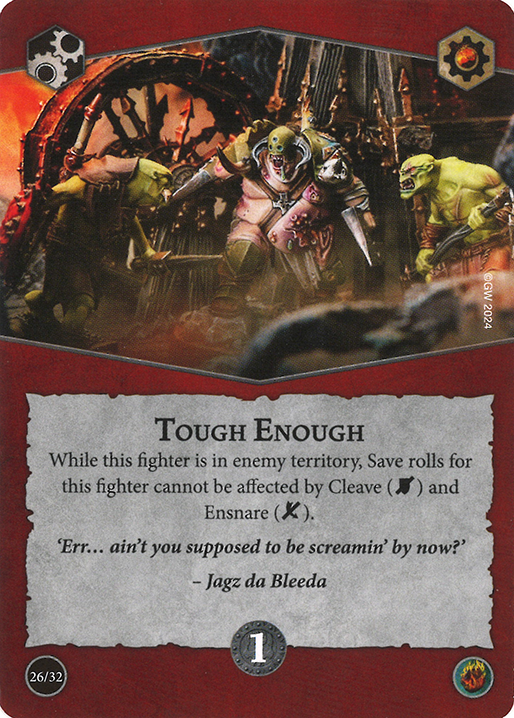
This deck also wins out on a second of the 4 hold requirements, which is defensive upgrades. It also contains a second guard ploy, however it is usually stronger as it does not have any positioning requirements, only requiring a charge. In addition, this deck also contains Impossibly Quick. This card is incredibly powerful, as it does not have a limit to how many defence dice you can have. This allows the deck to have access to fighters with 3 defence on guard, a practically unhitable defence characteristic. It is also the only deck that has protection against cleave and ensnare in the form of Tough Enough on other upgrade I am forgetting, which is an interesting, if a bit situational form of protection, especially for fighters with 2 shields.

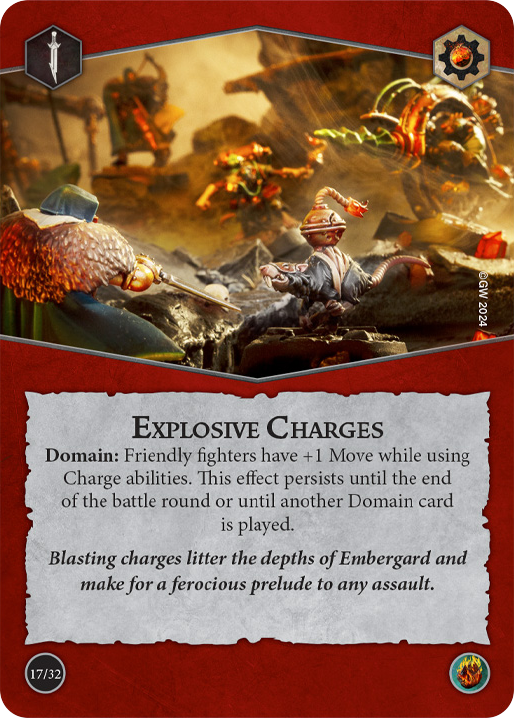
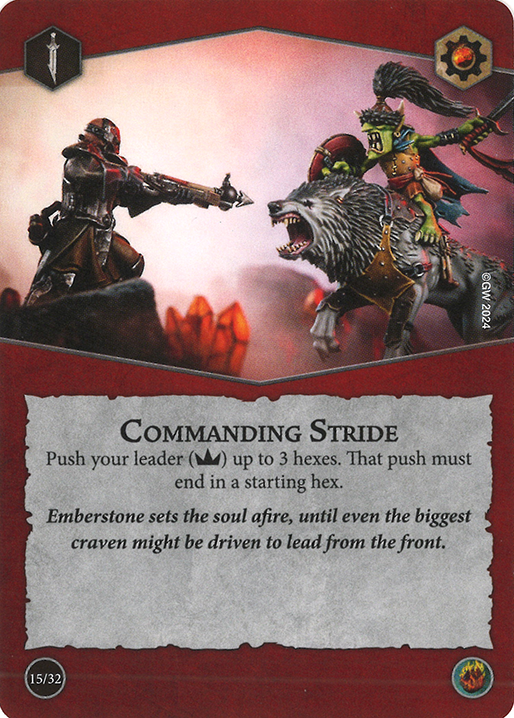
When it comes to mobility, it has less abilities to get on treasure tokens during a power step (it actually does not have any), however it does contain two teleports. Canny Sapper and Tunnelling Terror allow the deck to get almost anywhere on the board whenever they want. In addition it also contains great speed (which is a repeat from ES) and Explosive Charges, giving the entire warband +1 move (only on charges, but what else are you going to do). Swift Step is also a second, slightly worse copy of Duellist, allowing you more “guaranteed overruns”, which are especially valuable due to Broken Prospects. Also, if your warband has an important leader Commanding Stride is an incredible push that can protect them or bring them into the fray. This category is probably a toss-up, however personally I like PnP a bit more.
The one place where Pillage does struggle a bit is in anti-driveback. The only real tool the deck contains is Wary Delver. However, Pillage does not need this category as much as Nexus, as its objectives do not need you to stay on the feature tokens as much. All you need to do is delve them and make sure the opponent does not get on them easily to deny Torn Landscape and Strip the Realm. This category is still a win for Nexus, however it is not as clear as it should be.
When comparing Pillage to Nexus, Pillage wins in 2/4 categories and only looses in 1, giving it the slight edge. Nexus still struggles with its multitude of objectives that require attacks or being in specific positions compared to treasures, PnP’s more linear gameplan of move, delve, repeat allows it to play way more solidly. I have played a lot of both ES/NoP and ES/PnP and have always found PnPs scoring to be better.
The High Ground of Nexus
However, don’t believe that this deck can’t succeed. Even though it is not an incredible deck for pure hold pairings, this deck still is powerful and can definitely see play in other pairings.
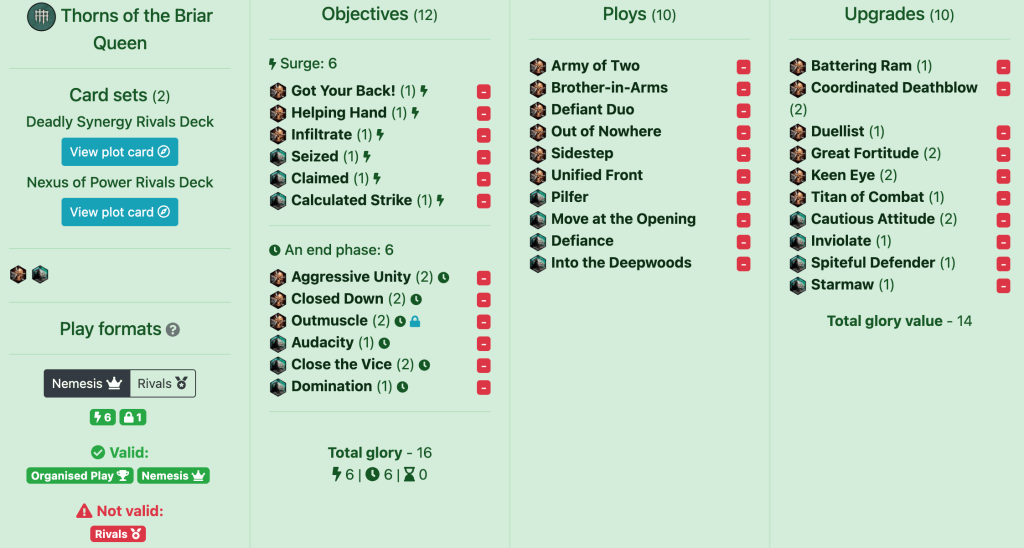
This deck using Thorns of the Briar Queen aims to get off as many united attacks as possible. The extra range given to covetous fighters allows the thorns to hit at range 2, often with surrounded for insane damage. In addition, the teleports (especially the treasure one) allow you to reposition easily to get covetous whenever you need to be.
The Nexus objectives are able to shine in this pairing. The attacks required to score Calculated Strike, Seized and Close the Vice now support the game plan of charging and teleporting to enemies around treasures. The synergy with Aggressive Unity is also powerful, as both can be scored off of just three attacks. The warband also has access to seven fighters, so keeping at least three alive to be able to score Domination and Claimed should be completely doable.
The Nexus ploys are also incredibly powerful for this deck. Move at the Opening allows you to get a united attack and a Covetous attack even though the closest fighter is up to 6 hexes away. Pilfer allows you to get united or covetous or the extra range granted by a treasure to allow for easy scoring while defiance gives those extra attacks an incredible accuracy boost, especially if the target is already flanked/surrounded, something easy to achieve by these ghosts. Into the Deepwoods allows you to make almost every result on the defence die a success against range 1 attacks due to flanked and delving the treasure after playing it makes you practically unhittable by most attacks.
The upgrades are not the best, but Inviolate being able to prevent flanks and surrounds is a useful ability to have, helping the ghosts survive a bit longer and making their somewhat inaccurate attacks without flanked more accurate. Starmaw allows ranged attacks from covetous fighters, making Close the Vice easier to score. Cautious Attitudes also gives you a range 4 attack, however this one deals 2 damage due to using the characteristics of the fighters and is considered a melee attack, so it also helps with Aggressive Unity. Spiteful defender also helps finding kills while you don’t have a charge token, something that becomes easier to do due to the range extention and the Mugging Thorns allow you to do.
There are many other decks that could also work with Nexus. Pillage/Nexus turns the downside of the plot card to an upside, either making Torn Landscape and Desolate Homeland easier to score or making your attacks much scarier. Nexus makes Edge of the Knife better, as the extra range by the plot makes hitting those 2 damage attacks to temper your opponents much easier while also having a grievous upgrade to play around Healing Potion. Even a pairing with Reckless Fury could work, using the extra range and surges from Nexus to make those range 1 attacks much more scary and score glory off of the attacks as well. Also, Nexus is still playable with ES as well, proven by the 11 ES/NoP players at WTC, including me (even though it is not my favorite). You can find out more in our WTC event article coming out soon!
Conclusion
Nexus of Power is not the second hold deck we wanted, however it has a unique play-pattern that allows it to still see play. It does not contain enough support for hold, especially as the deck does not score a lot of glory off of holding, however the extra range and attack based glory allows it to fill a niche that no other deck fills. Allowing range 4 attacks with 2 damage that still benefit off of all the melee attack upgrades is an incredible benefit that this deck has access to, and this makes it playable in many nemesis combinations. Even ES/NoP is still a playable deck, even though it needs to take the more of a flex approach than pure hold.
If you have any thoughts, please let us know on the Staggerers discord server under content-feedback. Have a good rest of your day!

